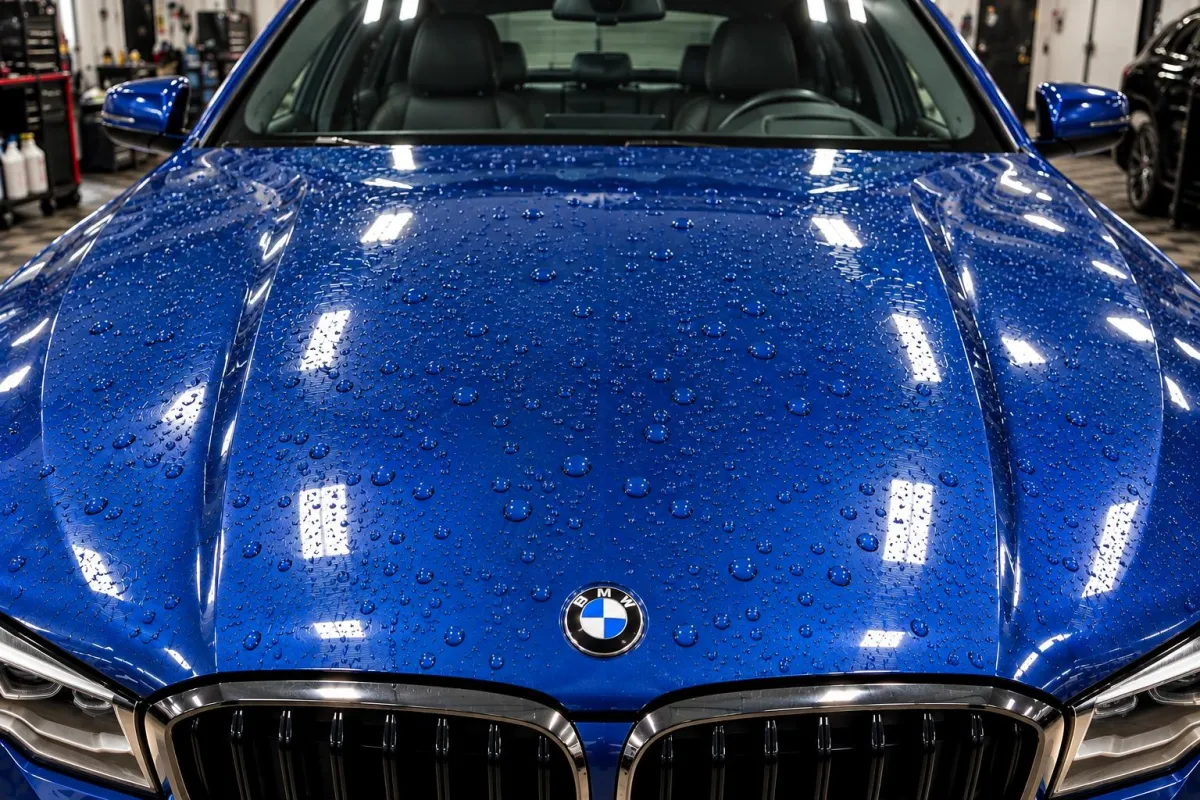
A professional ceramic coating lasts about as long as it’s rated for — 2, 3 or 5 years — when it goes on properly prepped paint and gets washed the right way. On Philadelphia roads, winter salt, brush car washes and neglect are what cut that short.
Lifespan by coating
We offer three ceramic coatings. The rating is how long each one keeps its gloss, slickness and water beading with normal driving and proper washing:
| Coating | Starting from | Good for |
|---|---|---|
| 2-Year | $400 | A real step up from wax and sealants; leased cars |
| 3-Year | $800 | Daily drivers that see every Philly season |
| 5-Year | $1,500 | New cars and cars you plan to keep for years |
We apply Skygloss coatings, and each is warrantied for the years in its name: 2, 3 or 5 years. Your quote names the exact coating and its warranty terms.
What PA winters and road salt do
PennDOT and the city pre-treat roads with salt brine before storms, and from November through March the Boulevard, I-95 and the Turnpike stay wet with it. Brine sprays onto the lower doors, rockers and rear bumper, then dries into a white crust. Left on for weeks, that crust slowly wears the coating down and starts working on the clear coat underneath.
A coating’s job in winter is to keep salt from bonding, so it rinses off instead of needing a scrub — but only if you actually rinse it. Cars washed every week or two through the winter keep their beading far longer than cars left salty until spring. A coating also makes those winter washes faster, which is half the reason people get one.
What shortens a coating’s life
- Brush car washes. Spinning brushes wear the coating fastest and add swirls.
- Harsh chemicals. Strong degreasers and aggressive traffic-film removers strip it faster than pH-neutral soap.
- Long gaps between washes. Salt and grime left sitting bond on top of the coating.
- Bird droppings, sap and bugs left for days can etch through.
- Poor prep. A coating applied over swirls, old wax or dirt can’t bond well. That’s why we decontaminate and, when needed, correct the paint first.
- Parking outside year-round means more UV, weather and tree fallout.
Maintenance that makes it last
- Wait about a week before the first wash while the coating fully cures.
- Hand wash every one to two weeks with a pH-neutral soap and the two-bucket method.
- In winter, rinse salt off the lower panels between washes — even a quick rinse helps.
- Dry with a plush microfiber towel or a blower to avoid water spots.
- Every so often, use a coating-safe spray topper to refresh the slickness.
- Wipe off bird droppings and sap as soon as you see them.
Signs your coating is wearing off
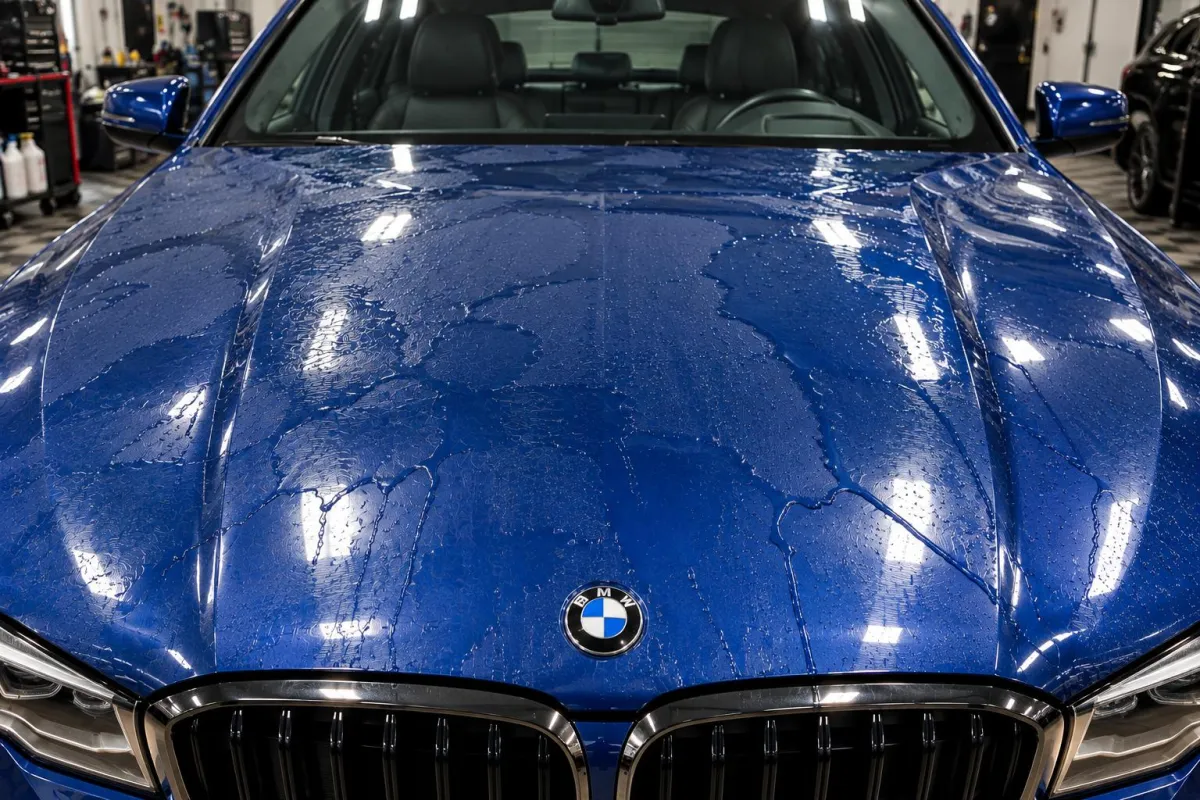
- Water stops forming tight beads and sheets or sits flat instead.
- The paint feels grabby instead of slick after a wash.
- Dirt sticks and needs scrubbing to come off.
- The lower panels and front bumper lose their beading first, because they take the most abuse.
Sometimes a decontamination wash brings the beading back, because the coating is just clogged with grime. If it doesn’t, it’s time to recoat. Text us a photo and we’ll tell you which one it is. And if what you really want is protection from rock chips, a coating isn’t the tool for that — compare it with film in PPF vs. ceramic coating.
Common questions
Does ceramic coating really last 5 years?
A 5-year coating can, when it’s applied to properly prepped paint and maintained with regular hand washes. Brush car washes, harsh chemicals and months of road salt shorten any coating’s life.
Does road salt ruin ceramic coating?
Salt won’t strip a coating overnight, but salt brine left on the paint for weeks wears it down. Rinse it off regularly in winter, especially the lower panels.
Can I take a coated car through a car wash?
A touchless wash is better than a brush wash, but hand washing with a pH-neutral soap is best. Brushes wear the coating and can add swirls.
Can ceramic coating be reapplied?
Yes. Once a coating wears thin, the paint can be decontaminated, polished as needed and coated again.
Is ceramic coating worth it in Philadelphia?
For most daily drivers, yes. It makes winter salt and road film rinse off and keeps the paint glossy. It won’t stop rock chips — that’s what PPF is for.