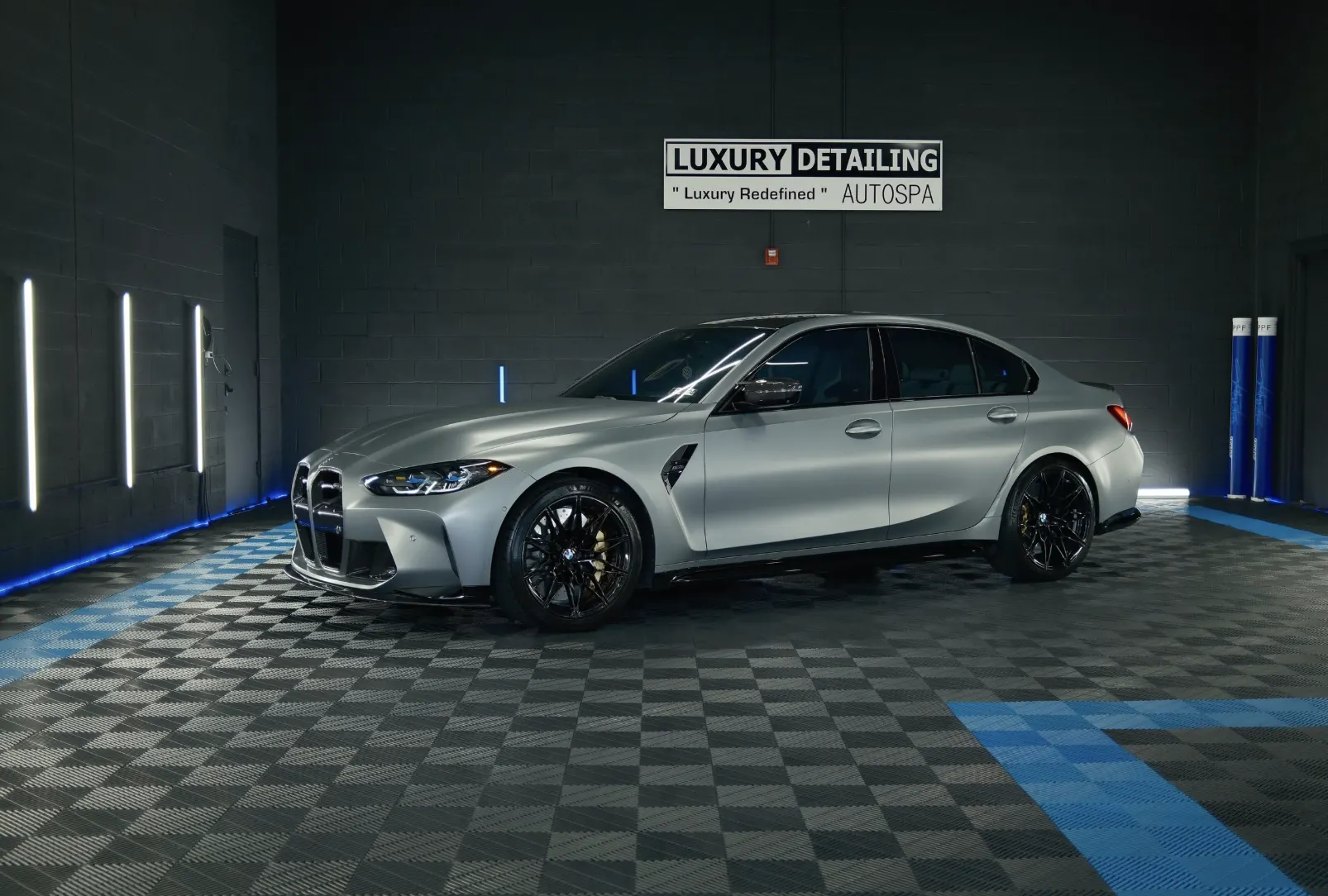
PPF is armor; ceramic is gloss and easy washing. Film physically stops rock chips and scratches. A coating doesn’t — it makes paint shinier, slicker and far easier to keep clean. For a new or high-value car on Philly highways, the best setup is front-end PPF plus ceramic on everything (including over the film).
What paint protection film does
Paint protection film is a clear urethane film applied to the paint — the Skygloss film we install is 7.5 mil thick. It’s thick enough to absorb the impact of gravel and road debris that would otherwise chip through to primer. Modern films are self-healing: light swirls and scratches in the top layer disappear with heat from the sun or warm water.
- Stops rock chips, sand-blasting and minor scuffs
- Resists bird droppings, bug acid and road salt stains
- Nearly invisible when installed with wrapped edges
- Warranty-backed: our Skygloss film carries a 7-year warranty
What ceramic coating does
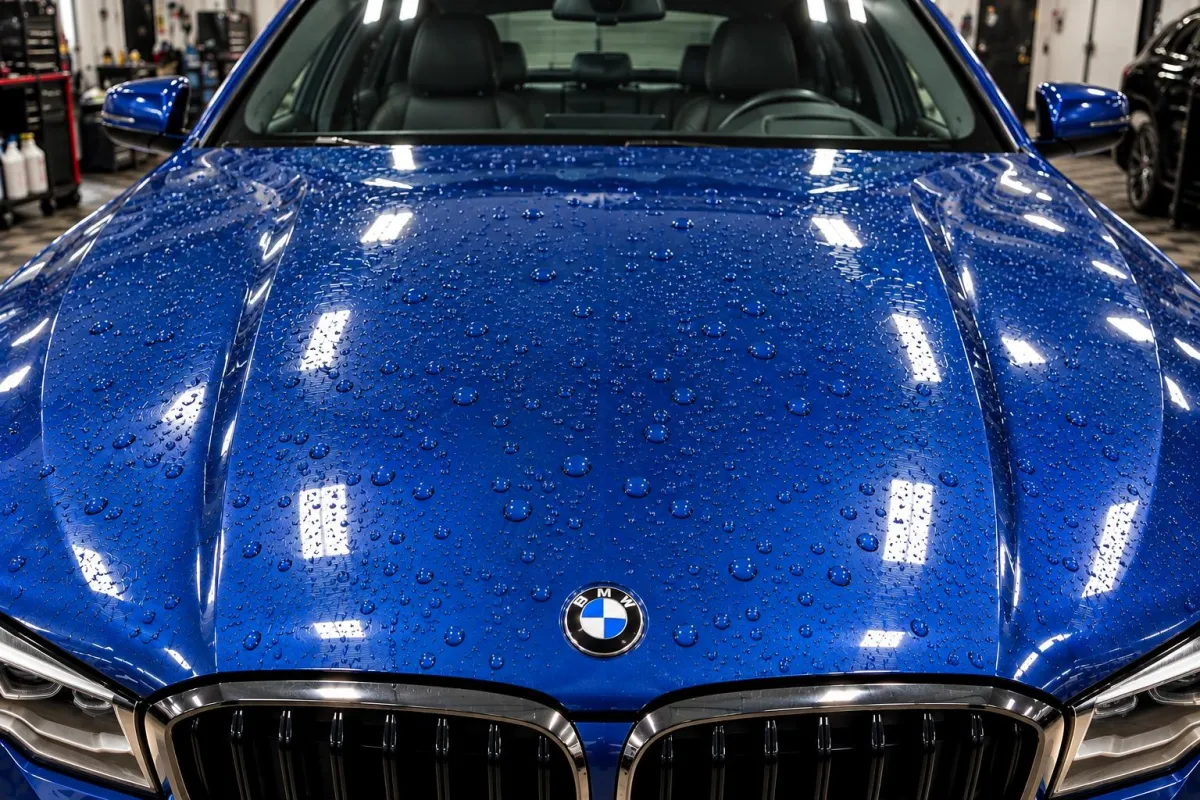
A ceramic coating is a liquid that bonds to your clear coat and cures into a thin, hard, glassy layer. It’s measured in microns, not mils — so it won’t stop a rock chip. What it does brilliantly is make paint deeper and glossier, shed water and dirt, and cut wash time roughly in half.
- Strong water beading — rain and salt spray rinse off
- UV and chemical resistance against fading and etching
- Rich gloss on paint, wheels, glass and trim
- Lasts 2 to 5+ years depending on the coating — see how long ceramic coating lasts
Side by side
| Feature | PPF | Ceramic |
|---|---|---|
| Stops rock chips | Yes — absorbs impact | No |
| Self-heals scratches | Yes, with heat | Some (resin film coatings) |
| Gloss & water beading | Good | Excellent |
| Easier washing | Somewhat | Much easier |
| Lifespan | Many years (varies by film) | 2–5+ years |
| Typical coverage | High-impact areas or full car | Whole car, wheels, glass |
Why Philly roads change the math
Most of the chips we fix come from three places: I-95 and the Boulevard (trucks kicking up gravel at speed), winter brine and salt (November through March), and construction zones that seem to be everywhere. If you commute on highways daily, the front bumper, hood and mirrors take the beating — that’s exactly what front-end PPF covers.
If your car mostly sits in a garage and does short trips around Somerton or Huntingdon Valley, a ceramic coating alone is usually enough.
What affects the cost
PPF pricing depends mainly on coverage (Full Front from $2,100, Highway Package from $2,600, Full Car from $5,500), vehicle size and paint condition — our PPF cost guide breaks it down. Ceramic coating pricing depends on the coating’s lifespan (2-year from $400, 3-year from $800, 5-year from $1,500) and how much prep the paint needs first.
One thing that’s easy to miss: both film and coating lock in whatever is underneath. Swirled paint needs paint correction first.
Which one is right for you?
Common questions
Can you put ceramic coating on top of PPF?
Yes, and we recommend it. A coating over film adds gloss and hydrophobic protection and makes the film easier to clean.
Will PPF turn yellow?
Modern urethane films are UV-stable and warranty-backed against yellowing. Older, cheaper films were the ones that discolored.
Can I see the film once it’s installed?
With wrapped edges and proper prep it’s close to invisible. You may notice a faint edge line up close on some panels.
How long until I can drive or wash the car?
You can drive away the same day. Wait about a week before the first wash so film adhesive and coating fully cure.